Keywords
- Linear supply chain
- circular supply chain
- circular economy
Abstract
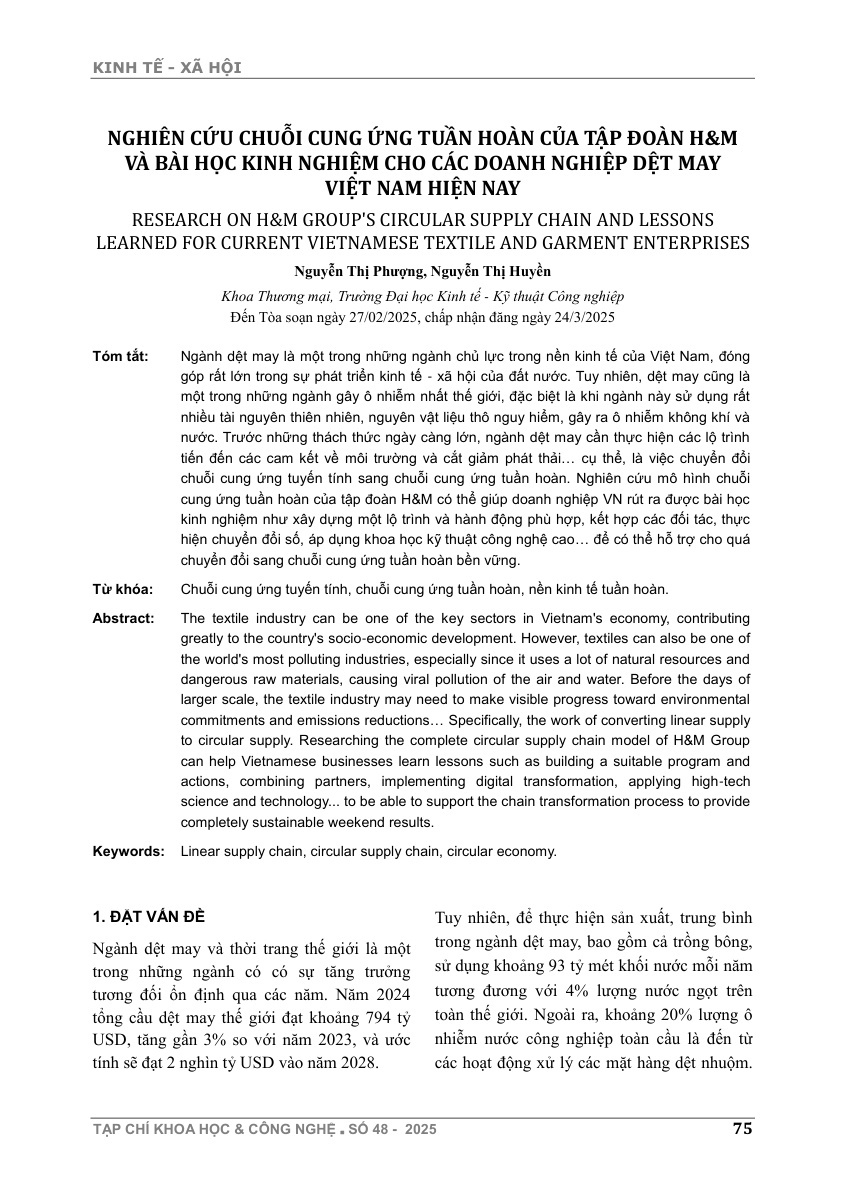
The textile industry can be one of the key sectors in Vietnam's economy, contributing greatly to the country's socio-economic development. However, textiles can also be one of the world's most polluting industries, especially since it uses a lot of natural resources and dangerous raw materials, causing viral pollution of the air and water. Before the days of larger scale, the textile industry may need to make visible progress toward environmental commitments and emissions reductions… Specifically, the work of converting linear supply to circular supply. Researching the complete circular supply chain model of H&M Group can help Vietnamese businesses learn lessons such as building a suitable program and actions, combining partners, implementing digital transformation, applying high-tech science and technology... to be able to support the chain transformation process to provide completely sustainable weekend results.Downloads
Download data is not yet available.
Published
2026-10-06
Issue
Section
Economics & Social Sciences